LOPA Management
Digitize and operationalize risk assessment knowledge.
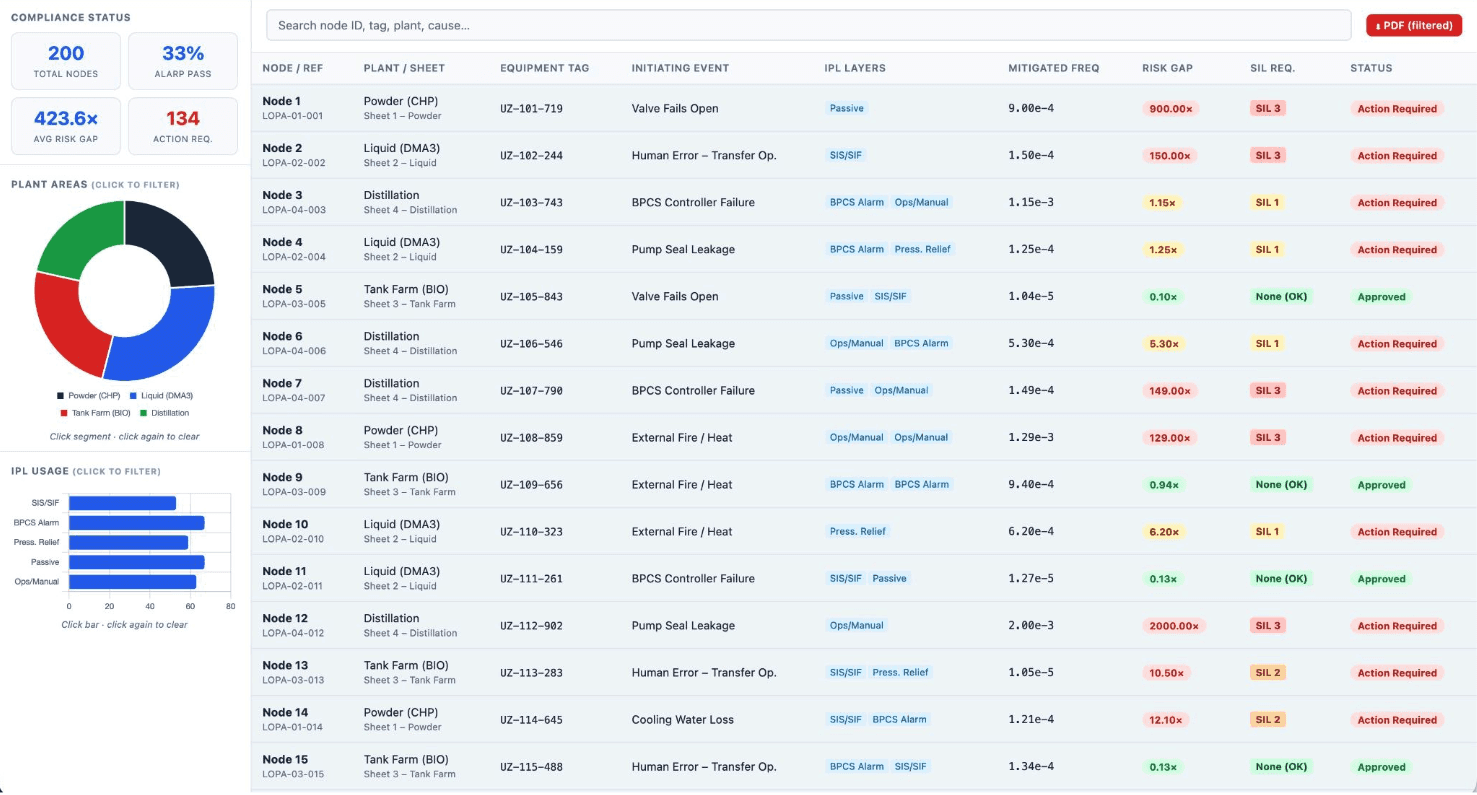
Move beyond spreadsheets and static documents by creating structured, searchable, and traceable risk intelligence. LOPA studies, safeguards, initiating events, consequence scenarios, and mitigation measures become connected digital assets that can be maintained, analyzed, and reused.
Key Capabilities
• Digital management of LOPA studies and risk scenarios
• Protection layer and safeguard tracking
• Consequence and initiating event modeling
• Risk assessment traceability
• Cross-reference engineering and operational information
• Change impact analysis for safety-critical assets
• Searchable safety knowledge repository
• Audit-ready risk documentation
Key Strategic Values
• Availability: Access facility information remotely, anytime
• Accuracy: Improve confidence through high-fidelity spatial data
• Accessibility: Make complex physical environments easier to explore and understand
Key Strategic Values
• Consistency: Standardize risk information across teams and sites
• Traceability: Maintain links between assumptions, safeguards, and outcomes
• Visibility: Surface safety-critical dependencies that are often hidden in documents
Outcome: Reduce manual site surveys, improve information quality, and create a reliable 3D foundation for engineering, operations, and future digital initiatives.
Outcome: Reduce manual LOPA management effort while improving consistency, traceability, and decision quality.
P&ID Intelligence & Knowledge Graphs
Transform engineering drawings into connected operational intelligence.
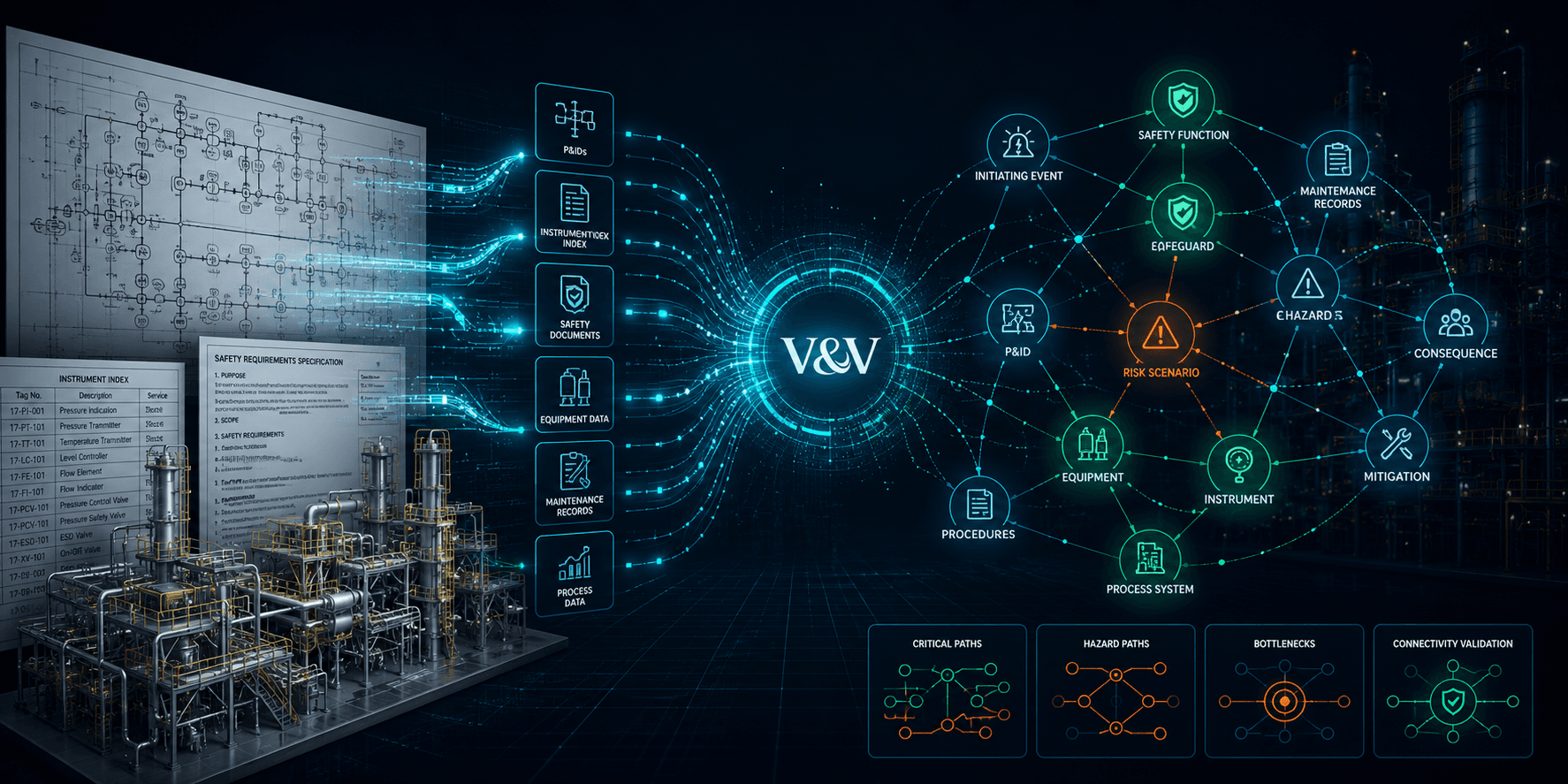
Specialized AI models extract tags, symbols, equipment relationships, and connectivity directly from engineering drawings and associated documentation. Knowledge Graph technology then creates a contextual layer that connects assets, systems, safety requirements, procedures, and operational information.
Key Capabilities
• Automated tag extraction from P&IDs
• Symbol and connectivity interpretation
• Engineering document digitization
• Asset relationship mapping
• Critical path identification
• Hazard path identification
• Bottleneck detection
• Connectivity validation
• Cross-reference instrument indexes and safety documentation
• Knowledge graph generation and relationship modeling
Key Strategic Values
• Context: Connect information traditionally trapped in separate systems
• Discoverability: Make safety and engineering knowledge easier to find and use
• Intelligence: Reveal hidden dependencies, critical paths, and potential failure cascades
Outcome: Create a connected knowledge layer that accelerates safety analysis, improves data quality, and supports more informed operational decisions.